Set Up OLVM Authentication
Qualys supports Oracle Linux Virtualization Manager (OLVM) authentication for Vulnerability Management and compliance scans using Qualys apps VM, PA, and SCA. Simply create an OLVM authentication record with the details of your credentials to authenticate to an OLVM environment.
The Scans > Authentication section is where you can find authentication records saved in your account, including OLVM records.
What are the steps?
Follow these steps to create or edit an OLVM record:
- Go to Scans > Authentication.
- Take one of these actions:
- To create a new OLVM record, select New >Hypervisors & Virtualization > OLVM.
- To make changes to an existingOLVM record, select a record in the list and choose Edit from the Quick Actions menu.
The New OLVM Record or Edit OLVM Record window appears (depending on the action taken). This is where you make your record settings.
- Choose a tab on the left side of the OLVM Record window to see the settings available. Provide the necessary inputs on each tab, then click Create (for a new record) or Save (when updating an existing record).
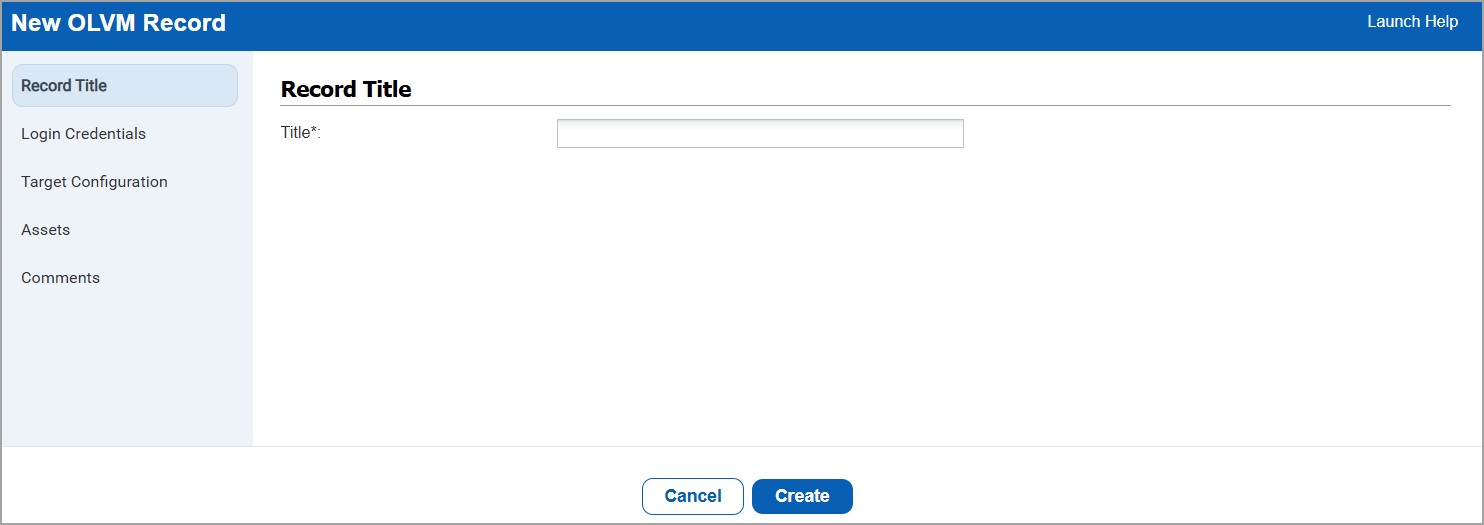
OLVM Record Settings
Refer to the help below for the settings that appear on each tab within the OLVM record.
This section has basic settings for the record.
Title - Give the OLVM record a title for easy identification.
Login CredentialsLogin Credentials
This section is where you provide credentials for the user account to be used for OLVM authentication.
Authentication Type: Basic
Choose Authentication Type: Basic, and then enter:
Username - Enter the username for the user account to use for authentication.
Password / Confirm Password - Enter the password for the user account. Then confirm the password.
Authentication Type: Vault based
Choose Authentication Type: Vault based to retrieve the password from a password vault. You need vault records already defined in your account to use this option.
Username - Enter the username for the user account to use for authentication.
Vault Type - Select the type of password vault you want to use. For each vault type, additional information is required. The information required depends on the vault type. Refer to the online help for your vault type to learn more.
Vault Record - Select a vault record that you have already configured in your account. The vault record has vault credentials to securely access sensitive information stored in the vault.
Quick Links: How to Use Vaults | Vault Support Matrix
Use Active Directory (AD) Secrets Engine - Turn on this option to securely retrieve AD credentials from HashiCorp Vault. You can connect directly to the target asset and fetch the credentails dynamically from the specified vault path.
Path-Enter the custom path to the secret engine resource.
Name- Enter the secret name that stores the key-value pairs.
Key- Enter the key name to identify a specific key-value pair.
Note: This Key field is displayed only if you turn off the Use Active Directory (AD) Secrets Engine option.
Target ConfigurationTarget Configuration
This section has Target Configuration settings for the record.
Port - Enter the port number that the OLVM instance is running on.
SSL Verify - Select this option to verify the server's SSL certificate is valid and trusted.
Hosts - Provide a list of FQDNs for all the host addresses on which a custom SSL certificate signed by a trusted root CA is installed.
Enter or select the target compliance hosts (IPs) that you want to authenticate to with the credentials provided in this record. Each IP address may be included in a single OLVM record.
Select the required Asset Type.
- IPs/Ranges - Use this option to add IP addresses/ranges to the record. Enter the IP addresses/ranges in the field provided.
- IP Range in Tag Rule - Use this option to add tags that have IP address ranges defined in the tag rule. All IP addresses defined in the tag rule will be associated with the record, including IPs that don’t already have the tag assigned. Click Add Tag to pick tags to include or exclude. Note that only tags with the dynamic tag rule “IP Address in Range(s)” will be available in the tag selector.
- Asset Tags - Use this option to add tags to the record for the assets you want included. IP addresses with the selected tags already assigned will be associated with the record. Click Add Tag to pick tags to include or exclude.
Provide important notes or comments for this record.