View Software in CSAM
The Inventory > Software tab gives an overview of the software on the assets in your organization, such as software license, platform, lifecycle-related information, end-of-life details of a software, authorized/unauthorized software, etc.
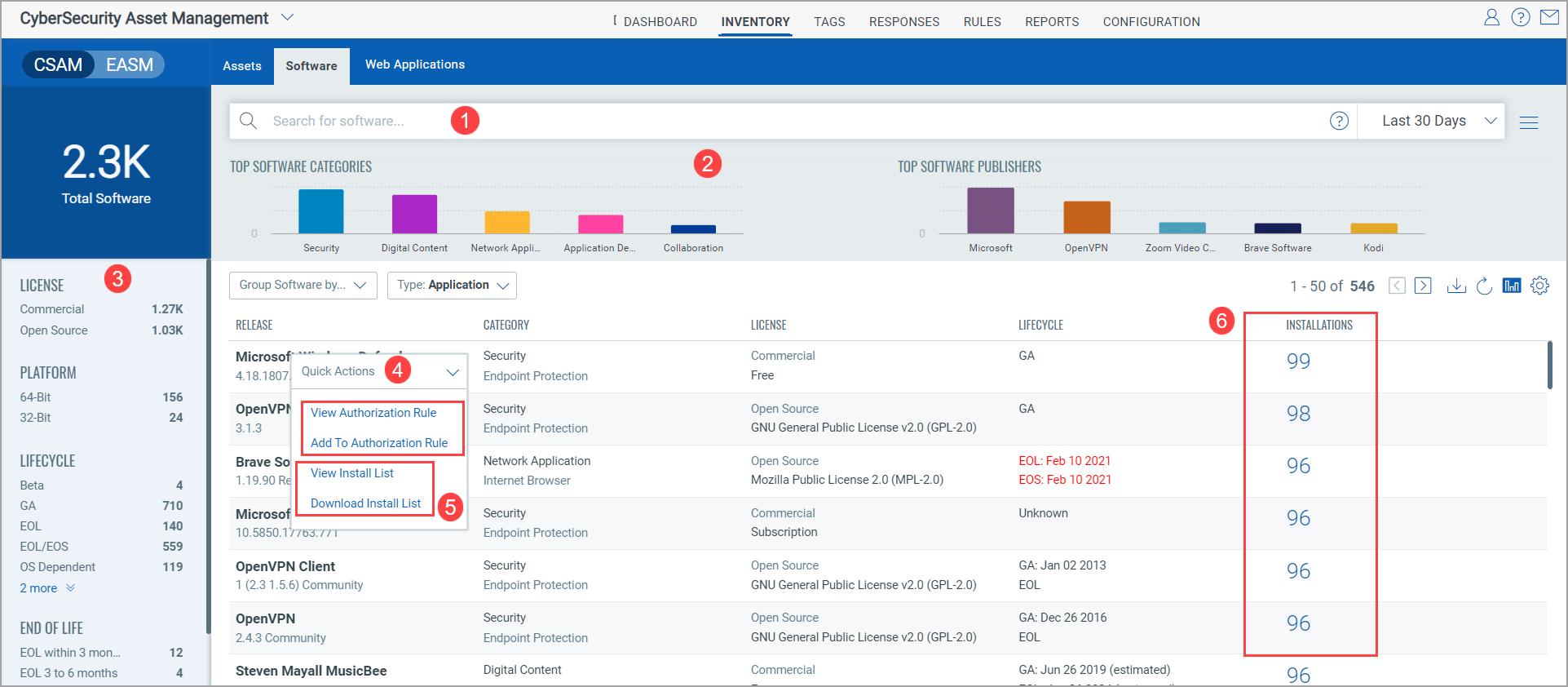
(1) Search for software using a Qualys Query Language (QQL) query for a specific timeframe. For more information, see Qualys Query Language.
Note: For all the date-related tokens, the date search is evaluated only for UTC format. The actual search results might show you the date as per your time zone.
(2) View bar charts for top software categories and software publishers. For more information on the categories, see the Usage Guide - Software in the Appendix.
(3) View the summary of different software attributes with count in the left pane. Click the count of software to view the list of software.
- License: Gives a summary of the license types with the number of software.
- Platform: Gives a summary of the software platform with the number of software.
- Lifecycle: Gives a summary of the software lifecycle with the number of software.
- End of life: Gives a summary of the software end of life, including the number of software. This information helps to identify software requiring an upgrade.
- Authorization: Gives a summary of software authorization (authorized/unauthorized/needs review) with the number of software.
(4) You can add a particular software to an authorization rule and view the authorization rule associated with the software.
To add software to the authorization rule, click Add To Authorization Rule from the Quick Actions menu.
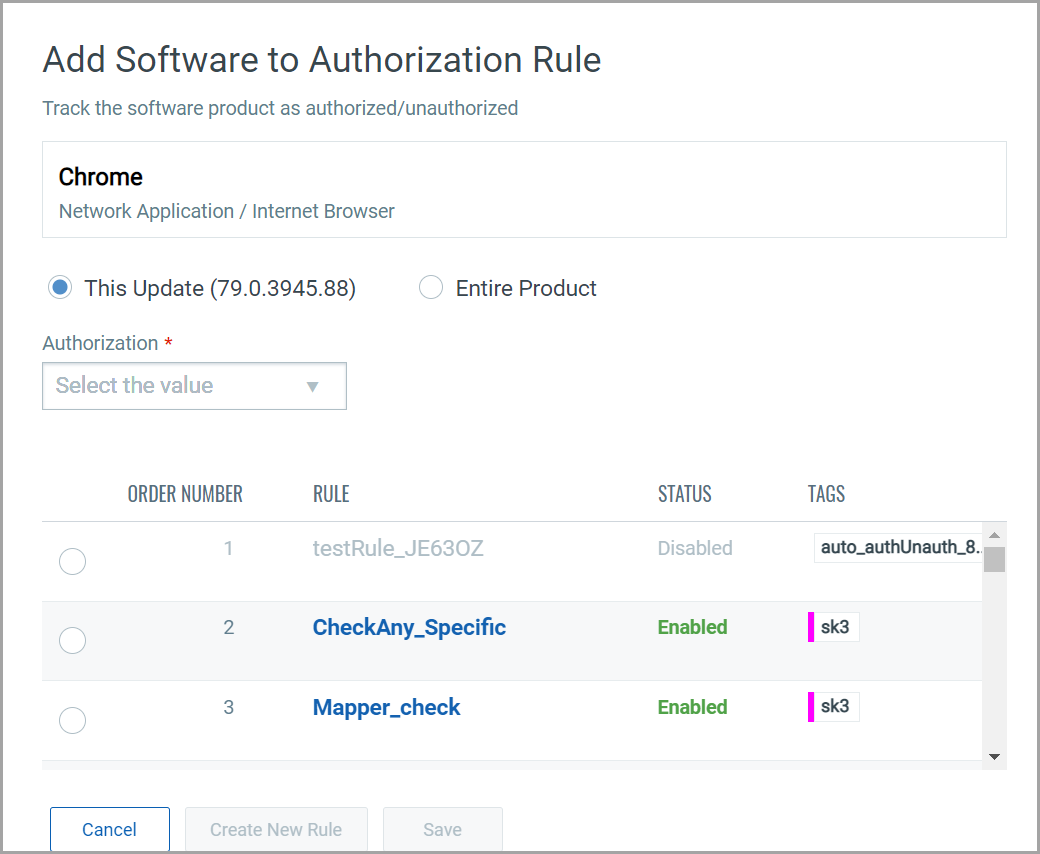
If the software doesn't have any update, you'll see only one radio button - "Entire Product" and it is auto-selected.
Select Authorization from the drop down list, choose existing rule or create new rule in which selected software will be added. Click Save.
If you select Authorization as 'Authorized,' you'll be able to mark that software as "Required" using the Mark as Required radio button. This software must be installed on the asset; otherwise, it will be flagged as 'missing required software' for the selected asset.
For more information, refer Track Authorized/Unauthorized Software.
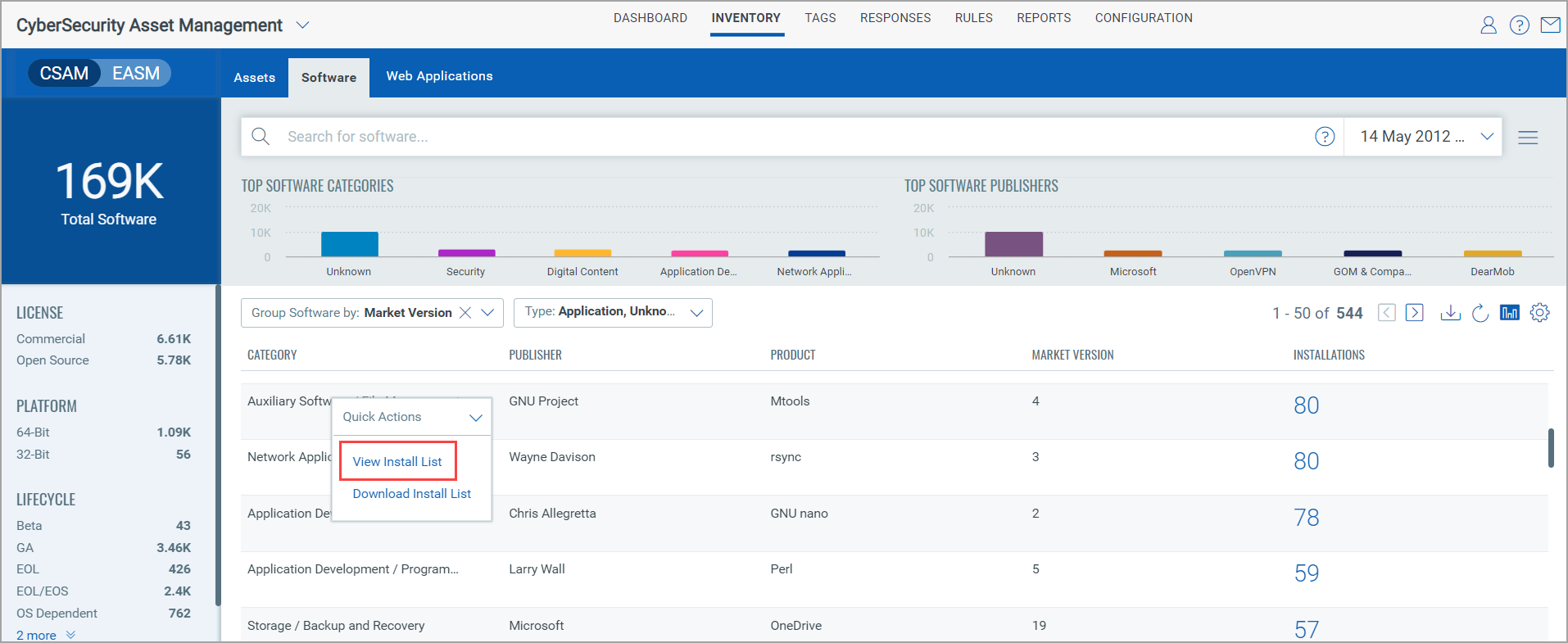
(5) A) Click View Install List from the Quick Actions menu. It will be redirected to the Installation Details page to view your software installation details.
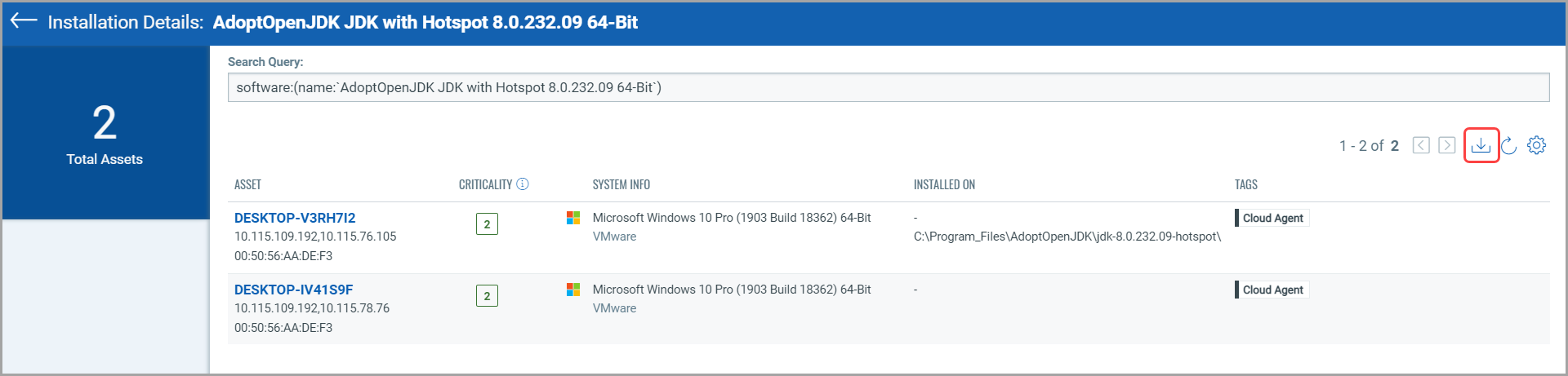
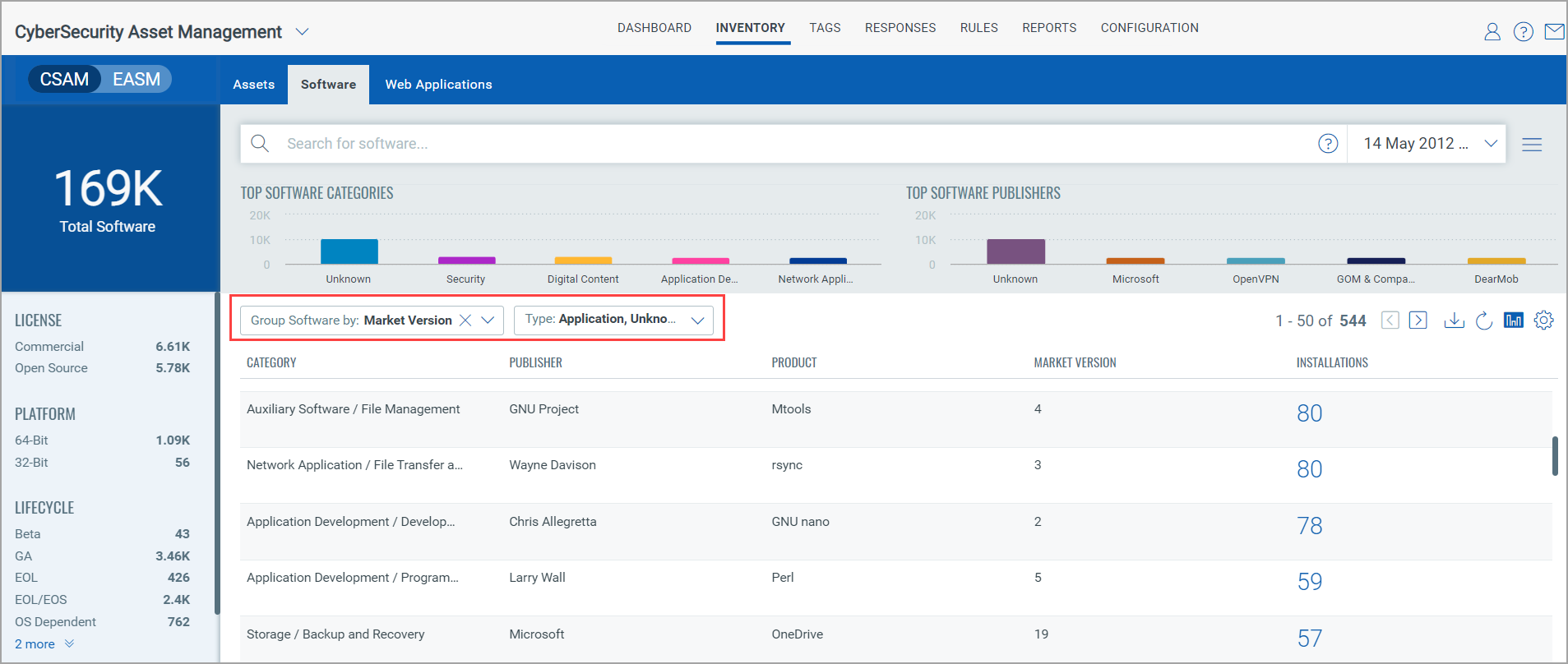
The number of columns displayed in the above screen will change if you list software using the “Group by” and "Type" filter. You can filter software by clicking the checkbox – Application, Unknown, and All, as shown in the screenshot below.
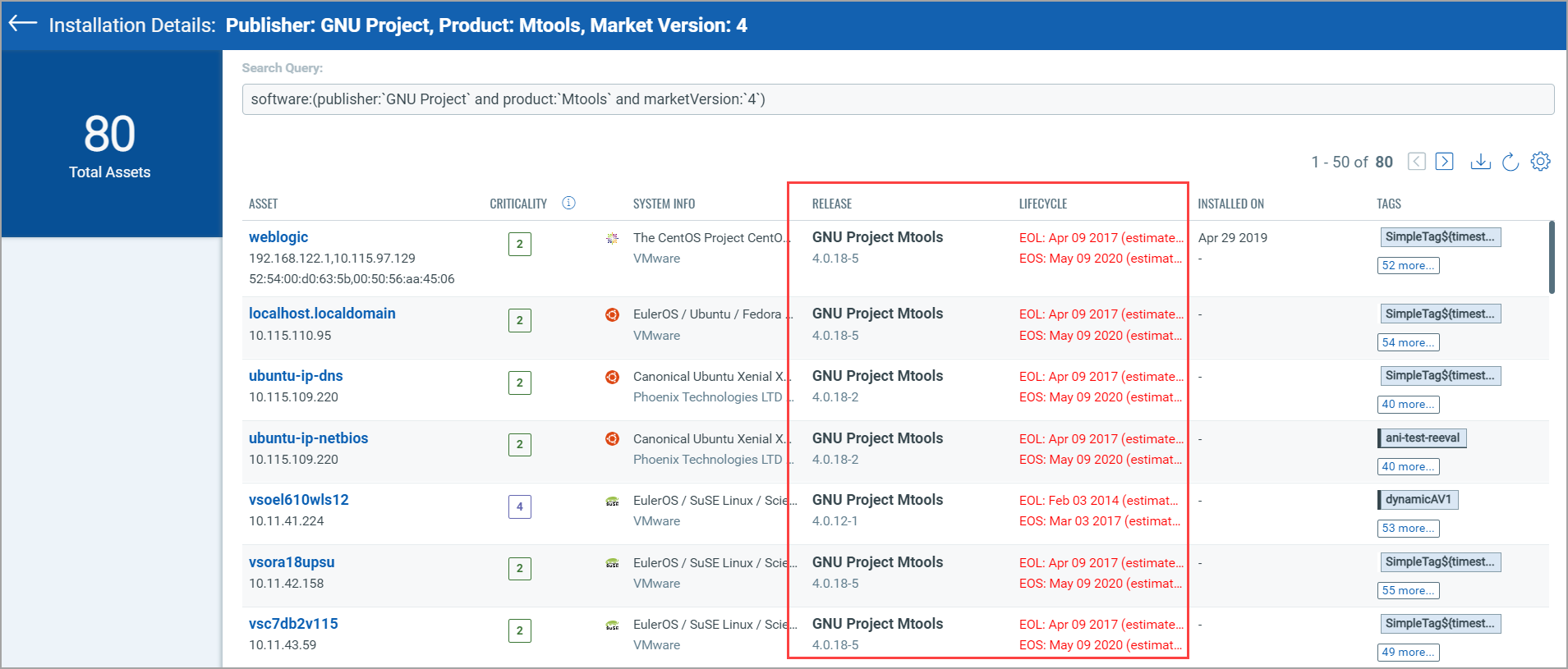
Click on the individual asset to view the Asset Details page. Click the Download icon to download a report in available download formats (CSV, HTML, XML) for a list of assets that contains asset and software attributes from the following list:
Asset attributes: Asset ID, Asset Name, Criticality Score, MAC Address, IP Address, BIOS Serial Number, Operating System, Operating System Category, Hardware, and Hardware Category
Software attributes: Software Name, Software Release, Install Date, Install Path, License Category, License Sub-Category, Lifecycle Stage, Lifecycle GA Date, Lifecycle EOL Date, Lifecycle EOS Date, Lifecycle EOL Support Stage, and Lifecycle EOS Support Stage
B) Click the Download Install List under the Quick Actions menu to download the asset list where a particular software is installed.
Select the timezone from the drop-down list to use it in report for the dates and choose available download formats (CSV, HTML, XML). Click Download button.
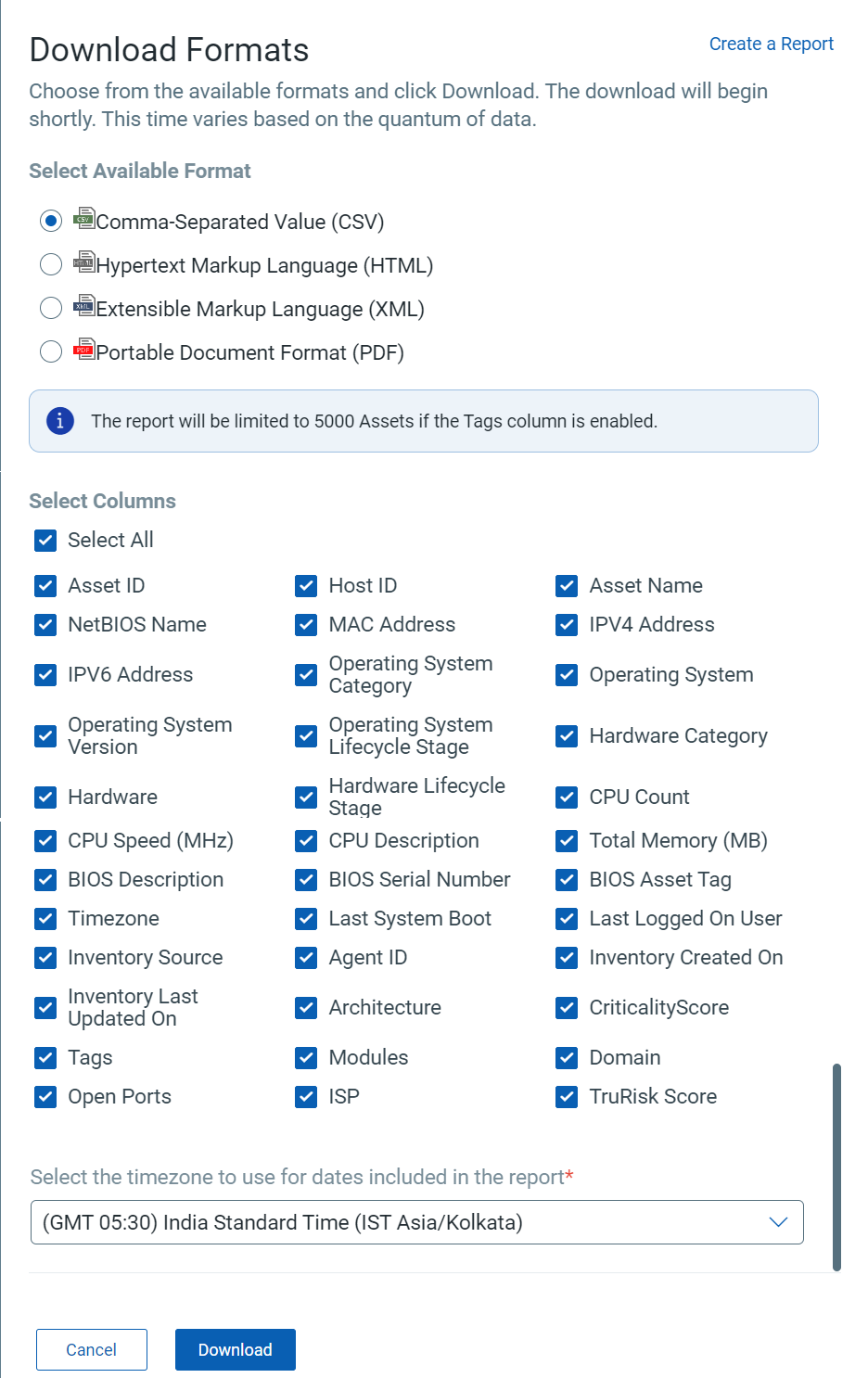
Click Create a Report link to create software details report.
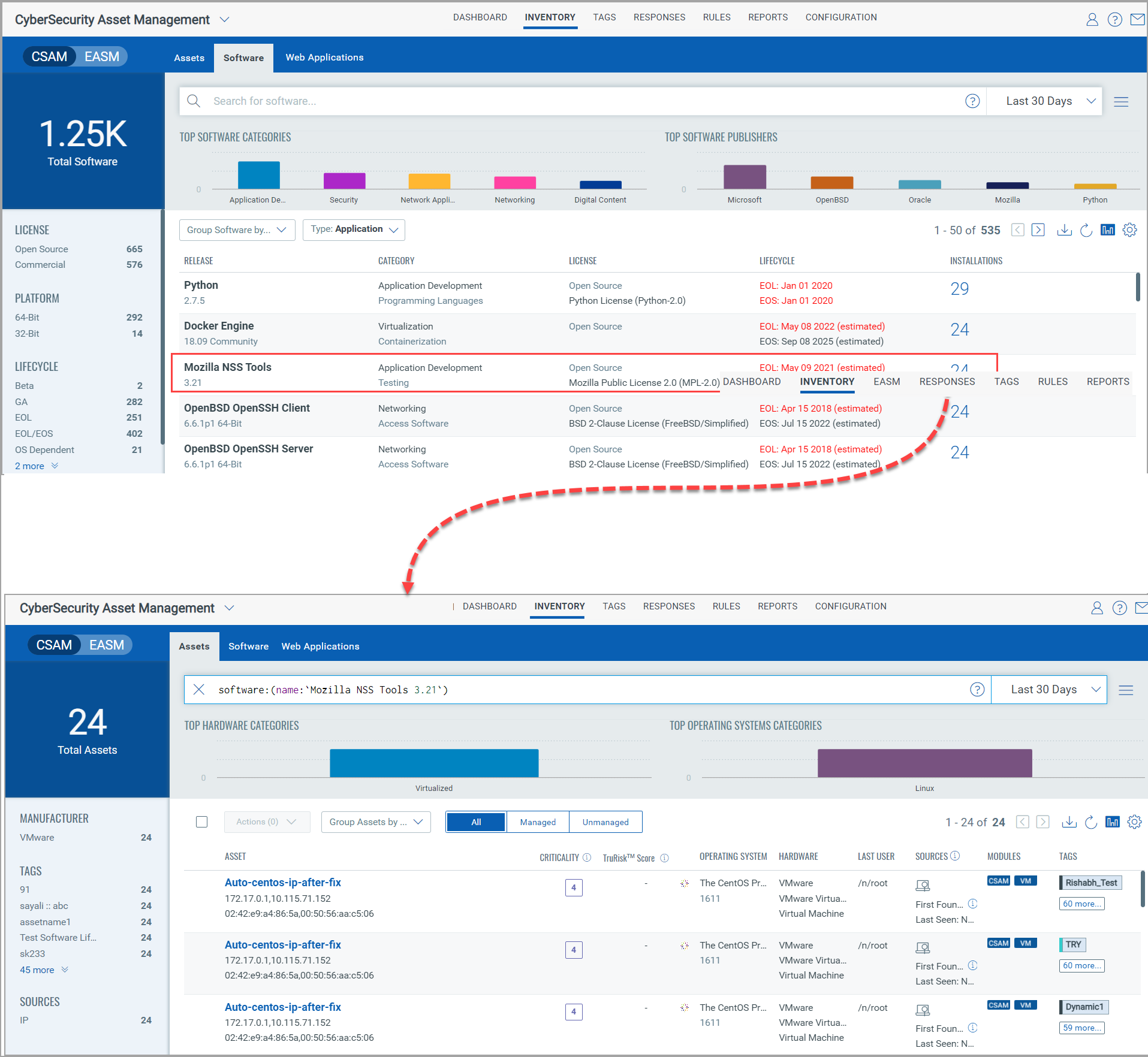
(6) Click count from the Installations column to navigate to Assets tab to view the asset list where the particular software is installed as shown in the screenshot below.
Software Lifecycle Stages
Software lifecycle stages indicate the current support status of a software release as provided by the publisher or vendor. Understanding these stages helps you assess software supportability, upgrade requirements, and potential security risks.
| Lifecycle Stage | Description |
|---|---|
| GA (General Availability) | Indicates that the software application release is actively supported by its publisher. The associated date represents when the software version became generally available. |
| EOL (End of Life) | Indicates that the publisher has ceased providing first-level support for the software application release. |
| EOL/EOS (End of Life / End of Support) | Indicates that the software application release has reached, or will reach, its final level of support. After the End-of-Software date, the product is no longer supported by the publisher. |
| Beta | Indicates that the software application release is in the beta phase and a stable production version has not yet been released. |
| OS Dependent | Indicates that the lifecycle of the software application release follows the lifecycle of its compatible operating system. |
| Publicly Unavailable | Indicates that the vendor or manufacturer does not publicly provide product version release information or product support lifecycle policies. |
| Not Applicable | Indicates that the product version was not discovered. Because the version information is unavailable, lifecycle data cannot be determined. |
| Not Available | Indicates that the software belongs to the Others software type, such as Utilities, Helper Packages, Device Drivers, and similar categories. Lifecycle information and related metadata are not provided for these software types. |
| Unknown | Indicates that lifecycle information is currently unavailable. This status can occur when:
|
- Lifecycle information is derived from publicly available vendor support policies and release information whenever possible.
- Some software products may not have lifecycle information available due to vendor limitations or incomplete product metadata.
- Lifecycle stages can help identify software that may require upgrades, replacement, or further review to maintain support and compliance.