Prioritization Overview
Prioritization helps you identify and address the most critical vulnerabilities and risks across your environment. Use this section to filter, assess, and act on high-impact findings efficiently.
Why Prioritization Matters
Prioritization helps security teams cut through the noise, narrow down focus areas, and take action where it matters most.
- Effective Resource Utilization:
Prioritization enables effective management of limited security resources by allocating them to address the most critical findings and focus on the most important assets. - Better Risk Management: Scope the list of open critical findings and assets with various filters. Assess the risk impact to drive effective remediation and mitigation strategies.
- Timely Compliance:Many regulatory requirements mandate addressing critical vulnerabilities. Prioritization allows to focus on the critical vulnerabilities and assets complying with the regulatory requirements becomes easy.
What You Can Do
You can perform the following actions:
- Identify critical vulnerabilities and assets
- Filter and prioritize findings based on risk impact
- Focus remediation efforts on high-value targets
- Support compliance with regulatory requirements
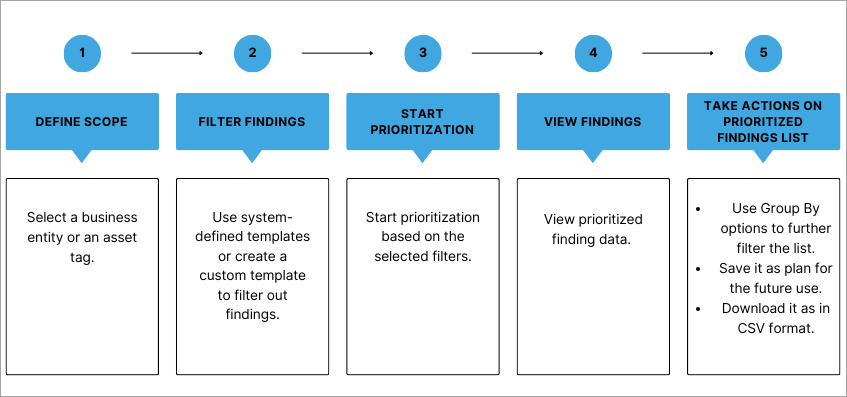
The following image provides a high-level overview of the end-to-end prioritization process. To know the step-by-step instructions, refer to Prioritization Workflow.
Who Should Use This
The following team can use the feature:
- Security Analysts – Focus on prioritizing daily findings to address the most critical risks efficiently.
- Security Managers – Monitor overall risk posture and track remediation progress across the organization.
- Compliance Teams – Ensure critical vulnerabilities are identified and addressed to meet regulatory requirements.